

Was the Room 1046 mystery solved? No. More than ninety years after a young man was found badly hurt in a Kansas City hotel room in January 1935, nobody has ever been charged with his murder. The guest checked in as Roland T. Owen. He was later identified as Artemus Ogletree, a teenager from Birmingham, Alabama, and the story gets stranger the closer you look. It involves a guest with no luggage, a man named Don who never turned up, flowers signed “Love Forever, Louise,” and letters that kept arriving at his mother’s house after he was already gone.
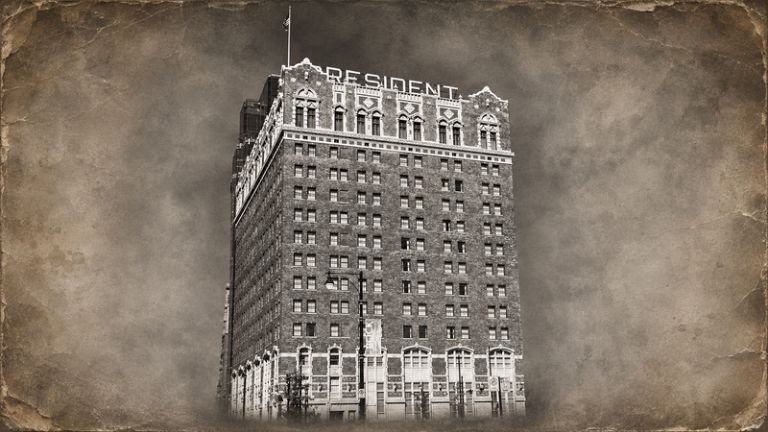
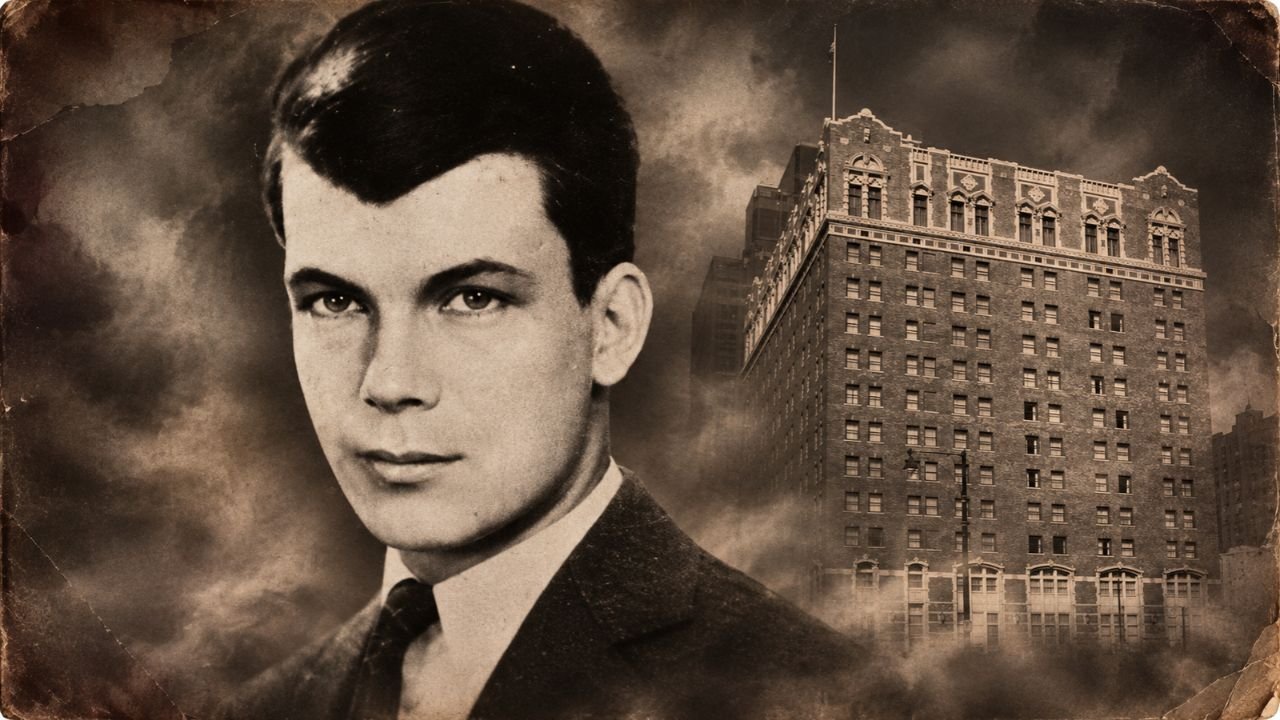
The Hotel President in Kansas City, where Artemus Ogletree checked in under the name Roland T. OwenRoom 1046 at a glance
- Where: Room 1046, Hotel President, Kansas City, Missouri
- When: January 2-5, 1935
- Victim: Artemus Ogletree, who checked in as “Roland T. Owen”
- Status: Unsolved. No one has been charged.
What Happened in Room 1046 at the Hotel President?
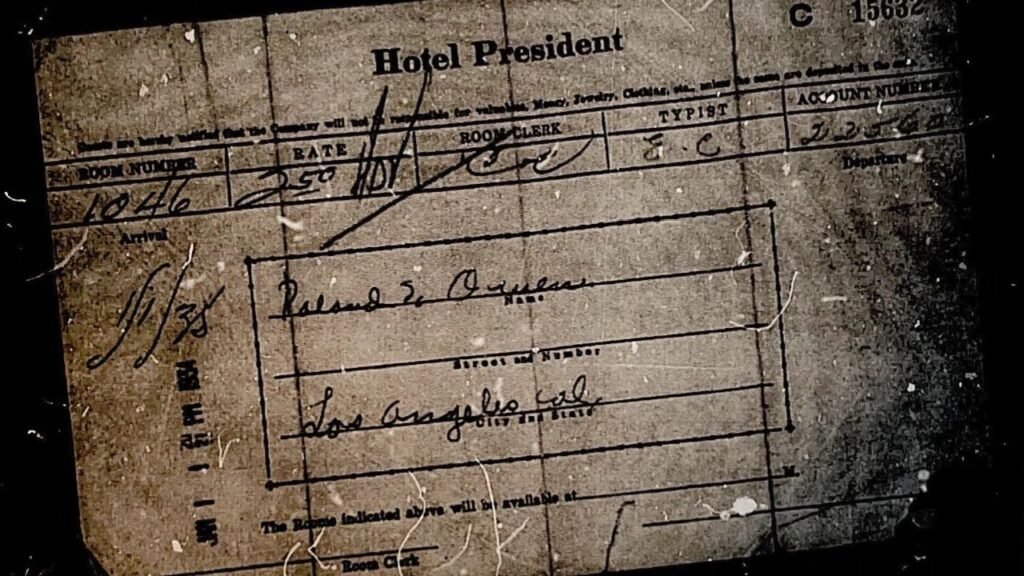
On the afternoon of January 2nd, 1935, a well-dressed young man walked into the Hotel President in downtown Kansas City and asked for a room. He signed the register as Roland T. Owen, with a home address in Los Angeles.
He had no luggage. A bellboy named Randolph Propst took him up in the elevator, and the unpacking took about two seconds: a comb, a hairbrush, and some toothpaste, all pulled from his coat pockets. He’d also asked for something specific, an interior room that looked out on the courtyard instead of the street. He got Room 1046, on the tenth floor.
Maybe the bags were somewhere else. Maybe there was a boring explanation. But the luggage turned out to be the least odd thing about this guest.
That afternoon, a maid named Mary Soptic went in to clean and found him there with the shades drawn and one dim lamp on. Before he left, he asked her not to lock the door because he was expecting friends. When she came back around four o’clock, he was lying on the bed fully dressed, and there was a note on the nightstand: “Don: I will be back in fifteen minutes. Wait.” Mary later told police he seemed worried, or possibly afraid.
Who Was “Don”?
The next morning, January 3rd, Mary found the door locked. That door could only be locked from the outside, yet when she let herself in, the young man was sitting in the dark, right where she’d left him. While she cleaned, the phone rang and he answered. She heard him call the person on the line “Don.” From his side of the conversation, Don seemed to want him to eat something. He said no.
Around four that afternoon, Mary heard two men talking inside the room. When she knocked, a loud, deep voice, which she didn’t think was his, told her they didn’t need towels. She left. A guest staying a few doors away later told police she heard men and women talking loudly and cursing that night, though nobody could say whether it had anything to do with Room 1046.
The Phone That Wouldn’t Stay on the Hook
At seven the next morning, January 4th, a switchboard operator noticed the phone in Room 1046 was off the hook and sent Propst upstairs. The door was locked, with a Do Not Disturb sign on the knob. A voice inside told him to come in, but he couldn’t. He shouted through the door for the guest to hang up the phone, then left, telling the operator the guest was probably drunk.
By 8:30 the phone was still off the hook, so a second bellboy, Harold Pike, went up with a key. He found the guest in bed in the dark, noticed dark spots on the bedding, and didn’t turn on the light. He put the phone back on its stand and left.
About two hours later it was off the hook again. This time Propst opened the door and found the young man on his hands and knees. He had been beaten and stabbed, and when a doctor arrived, he was sitting on the edge of the bathtub with cord tied around his neck, wrists, and ankles. The doctor later estimated the injuries happened between four and five that morning, hours before anyone first knocked on the door.
According to newspaper reports at the time, when he was asked who did this, he said “nobody” and that he’d fallen against the bathtub. That statement is less certain than it sounds. The doctor’s original medical affidavit, which Kansas City magazine obtained decades later, doesn’t mention him saying anything. So if he did say it, was he protecting someone? Frightened? Confused? We don’t know.
He was taken to General Hospital in a coma and died shortly after midnight on January 5th, 1935.
Prefer to listen? Here’s my podcast episode on Room 1046.
Who Was Artemus Ogletree?
Police now had a murder investigation, but first they needed to answer a basic question: who was the victim?
The Man Nobody Could Identify
The name Roland T. Owen led nowhere. Los Angeles police couldn’t find anyone by that name. Staff at the nearby Muehlebach Hotel remembered a man matching his description who had stayed there under another name, Eugene K. Scott, also from Los Angeles, also asking for an interior room. Los Angeles police couldn’t find an Eugene Scott either.
Hotel staff had noticed a large scar on the side of his head and an ear that looked like a boxer’s, and some guessed he was a wrestler. Police circulated his photograph, and tips came in from around the country. They kept falling apart. One man identified the body as his cousin, until the man’s sister pointed out the cousin had died five years earlier. A wrestling promoter in Little Rock said a man calling himself Cecil Werner had asked about matches the previous December. That went nowhere too.
After a few days, other murders pulled detectives away and the story faded. His body stayed in a funeral home for almost two months. On March 3rd, the funeral home announced he’d be buried the next day in the city’s potter’s field, the grave for people nobody claims.
Love Forever, Louise
That same day, the funeral home got a phone call from a man who wouldn’t give his name. He asked them to delay the burial and said he’d send money for a grave and service at Memorial Park Cemetery in Kansas City, Kansas. The funeral director warned him he’d have to tell police. The caller said he knew, and it didn’t bother him.
When asked why the young man was killed, the caller reportedly said he’d been involved with one woman while engaged to another, and that cheaters usually get what’s coming to them. Then he hung up. Nobody has ever confirmed any of it.
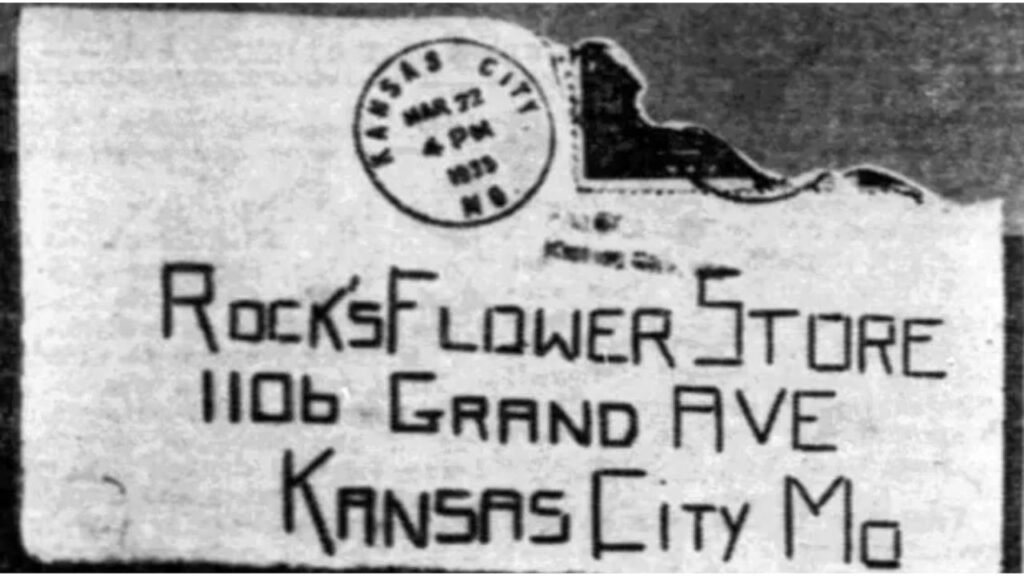
On March 23rd, an envelope arrived at the funeral home with twenty-five dollars inside, the address carefully lettered with a ruler. Two more envelopes, with five dollars each, went to a florist for thirteen American Beauty roses. The card, in disguised handwriting, read, “Love Forever, Louise.”
Police never learned who Louise was, or whether she was connected to the man on the phone. Only a minister and some detectives attended the funeral. Other detectives, dressed as gravediggers, watched the grave for days. Nobody came.
The Letters From a Dead Man
Meanwhile, in Birmingham, Alabama, a mother was starting to worry. Ruby Ogletree’s son, Artemus, had left home in 1934 to hitchhike to California. He wrote along the way, and the family wired him money.
Then, in early 1935, a letter arrived that didn’t seem right. It was typewritten, and as far as Ruby knew, Artemus didn’t know how to type. The style was more casual than his earlier letters, and it was postmarked in Chicago. More followed. In May, one said he was headed to Europe, and another said his ship was sailing that day. Both came from New York.
In August, Ruby got a phone call from Memphis, Tennessee. The man called himself Godfrey Jordan and said he was a friend of Artemus. In a long, rambling conversation, he said Artemus had saved him from a gang of thugs in Cairo, Egypt, that Artemus had married a wealthy woman, and that he couldn’t write because he’d lost a thumb in the fight.
Imagine being Ruby. Your son has been gone for months, his letters don’t sound like him, and a stranger calls with a story about Egypt. The steamship companies had no record of him going abroad. The American consulate in Cairo found no trace of him.
Then, in 1936, a friend showed Ruby a newspaper magazine article about the unidentified man killed in a Kansas City hotel. The photograph looked a lot like her son, and she told police about a scar on his head from a childhood accident with hot grease. It matched.
The man police knew as Roland T. Owen was Artemus Ogletree. He had been dead since January 1935, which means the letters Ruby received afterward couldn’t have been written by him.
Who Was Joe Simpson?
If you’ve searched for this case, you’ve probably seen the name Joe Simpson. Here is what has been reported about him, and what hasn’t.
Joe Simpson was one of the friends who set out from Birmingham with Artemus in 1934. According to reporting by Kansas City magazine, as summarized by the Unresolved podcast, he was the one companion the Ogletree family could name, and he was described as a cook who was out of work. Simpson reportedly said that he and Artemus went their separate ways in Los Angeles. Not much is known about when or why.
Ruby didn’t believe that account. After her son was identified, she wondered why Simpson had never reached out to the family, even though so many questions remained. Over many months she tried to arrange a meeting, and she felt he was avoiding her. In late 1939 she finally spoke with him. Afterward she wrote to Kansas City detectives that she was reasonably convinced his was the voice she’d heard on the Memphis call. She also described him as nervous when she told him she would always remember that voice.
That is Ruby’s account, and it’s important to say so clearly. Detectives set her suspicions aside at the time because they had already focused on another man. Simpson was never charged, nothing has proven he was involved, and what became of him is unknown.
Who Killed Artemus Ogletree? Suspects and Theories
Nobody knows. Here are the main ideas, along with how much support each one has.
Theory 1: Don was Joseph Ogden. After Ruby’s identification, police learned that Artemus had been seen at Kansas City hotels with a man who signed in as Donald Kelso. Whether that was the “Don” from Room 1046, they could never establish. In 1937, New York police arrested a man named Joseph Ogden after a murder in which a body was stuffed into a trunk to be shipped to Memphis. Ogden used several aliases, and one of them was Donald Kelso. The lead Kansas City detective became convinced Ogden was the killer. But Ogden was never charged in Artemus’s death, and a 1950 FBI handwriting analysis did not support the match between Ogden’s handwriting and the Donald Kelso samples. Handwriting analysis was an imperfect science then, and it still is.
Theory 2: A jilted-lover revenge plot. This comes from the anonymous funeral home caller and the roses signed Louise. Police pursued it for a time. But nobody ever identified the callers, and it has never been confirmed.
Theory 3: Organized crime. Some have suggested Don might have been part of a criminal outfit. There is no evidence for this.
Theory 4: Someone from Artemus’s own circle. This is where Joe Simpson comes in, but only as Ruby’s suspicion. No evidence ties him to the murder.
The bigger questions are still open. Who was Don? Who made the call about the funeral, and who sent the roses? And who was writing to Ruby, and calling her, as if her son were alive?
Was the Room 1046 Mystery Solved? Where the Case Stands Today
No. As of this writing, the murder of Artemus Ogletree remains unsolved, and no one has ever been charged.
Timeline
- January 2, 1935: A young man checks into Room 1046 as Roland T. Owen.
- January 4, 1935: He is found badly injured after three trips by hotel staff.
- January 5, 1935: He dies shortly after midnight.
- March 1935: An anonymous caller arranges his funeral, and flowers signed “Love Forever, Louise” arrive.
- 1936: Ruby Ogletree sees a newspaper article and identifies her son.
- 1937: Joseph Ogden is arrested in New York in an unrelated murder. Kansas City police believe he may have been “Don.”
- 1950: An FBI handwriting analysis does not support the Ogden-Kelso match.
- Around 2003 or 2004: A caller tells a Kansas City Public Library historian about a box of clippings and an unnamed item.
There’s one more detail. Around 2003 or 2004, a historian at the Kansas City Public Library took a call from someone out of state. The caller said they were helping sort through the belongings of an elderly person who had recently died, and had found a box of newspaper clippings about this case. The box also held an item that the stories kept mentioning. The caller wouldn’t say who they were or what the item was.
Frequently Asked Questions About the Room 1046 Mystery
Was the Room 1046 mystery solved?
No. The Room 1046 mystery remains unsolved. Although investigators eventually identified the victim as Artemus Ogletree, no one was ever convicted of his 1935 murder at the Hotel President in Kansas City, Missouri.
What happened in Room 1046?
In January 1935, a young man registered at the Hotel President under the name Roland T. Owen. Two days later, hotel employees discovered him severely injured inside Room 1046. He died the following day. Investigators uncovered strange circumstances surrounding his stay, but never established who attacked him.
Who killed Artemus Ogletree?
The person responsible for Artemus Ogletree’s murder has never been conclusively identified. Investigators examined several suspects and possible connections, including a mysterious man known as Don, but the evidence never resulted in a murder conviction.
Who was Roland T. Owen?
Roland T. Owen was the false name used by Artemus Ogletree when he checked into the Hotel President in January 1935. His real identity remained unknown until 1936, when his mother, Ruby Ogletree, recognized his photograph.
Is Room 1046 still open?
The Hotel President still operates in downtown Kansas City as the Hilton President Kansas City. However, it has undergone extensive renovations, and it is unclear whether the original Room 1046 remains available to guests under the same room number.
Final Thoughts
What stays with me about this case isn’t just what happened in Room 1046. It’s what came after.
The anonymous caller who didn’t want him buried in a grave for the unclaimed. The roses signed Louise. And a mother getting letters and a phone call from a son who was already gone. Whoever wrote to Ruby knew who Artemus was, and where his mother lived, months before police even had his name. We still don’t know who that person was, or what they wanted.
If you like cases where the central questions never got answered, you might also enjoy my post on Who Put Bella in the Wych Elm- Click Here to Read
Sources & Further Reading
- Kansas City magazine, “The Owen Case”: https://kansascitymag.com/the-owen-case/
- Kansas City Public Library (2012), “The Mystery of Room 1046, Pt. 1: Roland T. Owen” (archived): https://web.archive.org/web/20120321030654/https://www.kclibrary.org/blog/kc-unbound/mystery-room-1046-pt-1-roland-t-owen
- Kansas City Public Library (2012), “The Mystery of Room 1046, Pt. 2: Love Forever, Louise” (archived): https://web.archive.org/web/20120725031332/http://www.kclibrary.org/blog/kc-unbound/mystery-room-1046-pt-2-love-forever-louise
- The New Yorker (1938), “The Homicide Squad in Action”: https://www.newyorker.com/magazine/1938/01/08/the-homicide-squad-in-action
- FOX4 Kansas City, “Unsolved murder in 1935: The unusual guest at a Kansas City hotel”: https://fox4kc.com/news/unsolved-murder-in-1935-the-unusual-guest-at-a-kansas-city-hotel/
- Unresolved podcast, “Room 1046 (Part Two)”: https://unresolved.me/room-1046-part-two






No Comments